Phenomenal . . .

Phenomenal . . .
Life, Growth, and Connection (This sunflower was nourished by my hands.) 2010; Photography by Benita Blocker. Please become a follower of this blog.

Total Pageviews

Showing posts with label protective styling. Show all posts

Wednesday, July 8, 2020

Crochet braids 101 for 2020

River Locs 14" Crochet braids by Benita Blocker

Crochet braids are my number one recommendation for those needing a change from their usual natural hair routine.

Passion Twists/Bomb Twists Crochet braids by Benita Blocker.

I highly recommend removal after four to seven weeks since you can not shampoo the crochet braids. Going months can cause your braids to dreadlock especially if you are sweating a lot. Removal gets more and more difficult after seven weeks.

Crochet braids updo by Benita Blocker.

Crochet Braids (Valley Wave) by Benita Blocker.

I customize each client with a braiding pattern based on how they want to wear their look.

Friday, August 24, 2018

Want thicker hair? Check out these Don'ts!

2019 Picture Update


I am constantly being asked about making hair thicker.  In previous articles that I posted on this blog, I mentioned consuming Matcha Green Tea for nutritional value as well as allowing the scalp, a living organ, to breathe.

So how about the Don'ts that I feel may be causing some thinning:

  • The Ponytail
  • The Crochet Braiding Hair
  • The Protective Styling (Wigs and Weaves)


The Ponytail

So you have formed that perfect Ponytail that has been preserved for a week or more -  Then when I finally undo that ponytail holder, sometimes an odor permeates with the ponytail release.  This means the ponytail looked cute, but your scalp could not breathe.  Therefore long term suffocating the scalp is going to cause thinning.  Loose ponytails or Loose updos may not look polished, but they are healthier.


The Crochet Braiding Hair

I love the Crochet Braiding services, but most of the hair is not human and does not allow a lot of air to get through to the scalp.  It can be very hot. Less hair installed is better than a thick head of hair.  8inch human crochet hair is now available for those allergic to the other blends out there.  Consider mohawk and short styles.


Protective Styling
Wigs or Weaves, if you can not get to your scalp, then air may not be able to get to it.  This restriction can cause thinning.  So rethink your breathability versus the style.  Maybe consider more special occasion wig/weave wearing.

Sunday, June 10, 2018

The Hair Industry is Cycling Back to its Roots!


Weave/Wig  versus 
Silver hair
Cornrows 
and 
a Mohawk
all rolled into one.
2018.

I used to think that my brilliant mind was enough to attract any man that I wanted.  However, a woman' hair alone can drive men wild.  Enhanced or not, biblically speaking, the hair is a woman's glory.  So why am I seeing so many Black Panther Wakanda haircuts? There are so many short afros, fades, and almost baldheaded women around every corner.  I respect the independent, bold thinking, but please make sure that your body is right and tight.  

Men keep saying that they don't want to feel like they are sleeping with another man.

On a separate note, the cost of living is now where two incomes are needed. Women need hairstyles that they can maintain despite the weather changes. Most women are now working women. Protective styling can be the easiest way to look polished without the daily grind of hairstyling. So men need to support their working ladies because 2018 is a balancing act!

Tuesday, December 13, 2016

Ethnic Hair Tips From a Beauty industry leader


  1. Before the "protective styling" trend, I was wearing half wigs to allow my hair to rest.
  2. Before "invisible part" quickweave became popular, I was the first to create that "part illusion" that I know of.
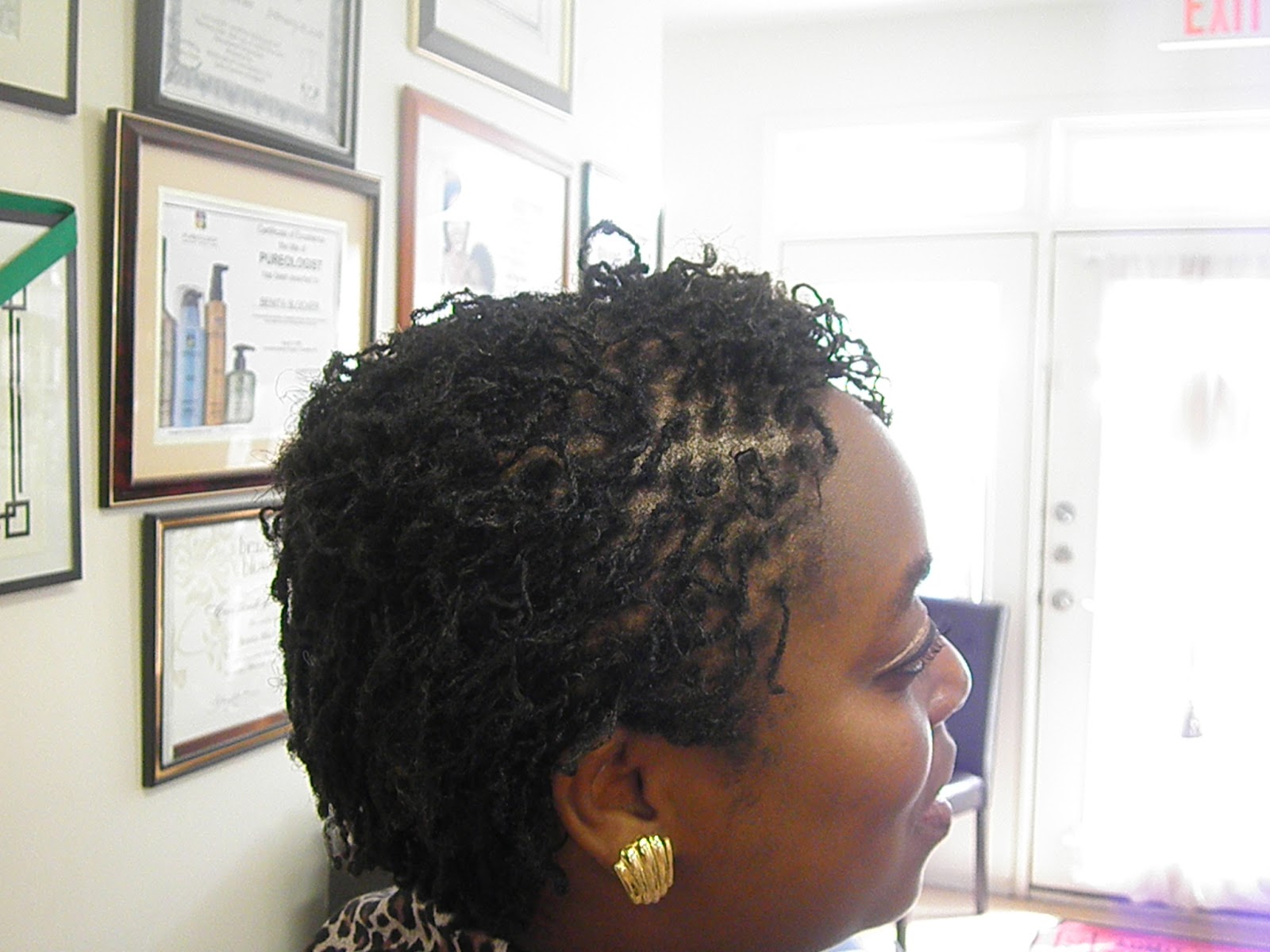
  3. Four years and four months ago, I saw the vision of my hair in smaller locs.  The picture above reflects what a $750 installation and three Sisterlocks 4-day training sessions can lead you to.
  4. Everyone should learn to self maintain their locs in partnership with a loctician.  
  5. Interlocking can deliver a neater look to locs, but that method also enables hair from an adajacent loc to get crossed over.  Those with fine hair are more likely to get cross-over hair because one can barely see the finer hairs.  Twisting or palm rolling are probably the safest root tightening method for locs.


NOTE:  I may add on to this list periodically.

Wednesday, March 23, 2016

The Three Universal Hair Categories and 2016 Trend Analysis


There are three ways to describe hair universally:
  • Loose natural
  • Locked natural
  • Permed (Permanently relaxed or Permanently curled)

Loose natural hair can be thermally straightened to look like a relaxer or it can be worn in its natural state.

As far as wigs go, they have become as common as lipstick in 2016.  With people changing hair length and haircolor on a daily basis, "wig shopping" has been the new "girls outing."

Blame it on the weather!  Blame on people wanting a look that they were not born with.

You can now wear any curl pattern that you desire through the use of the crochet braiding process in about two hours. Corkscrew coils?  No problem.  Romance Curls? No problem.

2016 Hair, especially "Black hair" has floored me.  I tell new customers that I actually service more hair than I do weave so that they know that my specialty is "haircare."

All the weaves.  All of the uniform sew-in's. All of the wigs. My head has been spinning lately.  I often ask myself - will the trend to wear your own hair come back any time soon?

The barbers must be seeing an increase in women with short afros. What happened to mens' demand for long hair?

More and more people have found hair partners, and they maintain each other's hair at home.  YouTube tutorials are cutting out the hairdressing profession.  We are going back to the time before Madame C. J. Walker started beauty salons.

Surprisingly, going to the hair salon, now means washing, conditioning, and blowdrying BEFORE you get to the salon to get the sew-in, crochet braids, or individual braids.

Natural hair practitioners can now provide almost the same hair services as cosmetologists in North Carolina.  Cosmetologists are also licensed for esthetics and nails as backup plans.

Is the hair extension/wig industry recession-proof?  Will all the protective styling mania end anytime soon?

Feel free to comment.  This article is more about you the audience than me the hair professional. Inquiring minds want to know.  Will the commercial hair demand ever peak out?


Tuesday, December 2, 2014

Even Horses Benefit from Protective Styling!


"This breed of horse, Friesian, is known for having full thick manes.  Good nutrition and constant care are required.  Note the waves, this mane has most likely been braided to keep it up and safe from causes of breakage.  That includes the tail too." - a Facebook commenter

Sounds like protective styling to me!

Sunday, August 24, 2014

Braided WrapAround Hairstyling by Benita Blocker

 Goddess braid wraparound hairstyling by Benita Blocker, 2014

This braided wrap around look can be achieved with natural hair or with relaxed hair.  Depending on the length of your "Expression" jumbo braid, you may have two to three revolutions around the head.

To achieve this look with relaxed hair, then the Janet Expression 3x Braid which is 86 inches long was used.  Because it is Toyakalon, it has a silkier look to blend in with relaxed hair.  Because the 86 inch braid is so long, the whole pack was required for this style.

Last week, I wrote an article about the Bijoux Expression braid which was around 80 inches long and more hair seemed to be in the pack.  Only a half pack was needed to achieve a similar 2 revolutions look on natural hair using the Bijoux brand of Expression Jumbo braid.  The Bijoux braid was Kanekalon fiber which is less silky in texture.

There are not many women of color with this look online so I may do a youtube mini-tutorial on the hairstyle; however, please do not commit me to it!

Keeping the extra long jumbo braid detangled is the trick to this style.  I charge around $55 for this hairstyle with full shampoo and blow-dry. Optional straightening is an additional charge. This hairstyling is considered protective styling.

Thursday, March 6, 2014

Why I Didn't Attend Bronners Brothers Hair Show

Nope, I didn't attend the Mid-Winter Bronner Brothers International Hair Show in Atlanta this past February 2014.  Why?

1)  I paid in advance for a three day ticket last October 2013 but for the professional, veteran hairstylist that I am, who does not party, I did not see three days worth of vendor attractions.  Some of the vendors that I was looking for were not even there.  So I was bittersweet, because it was a smaller show, I met many more people on a more personal networking level, but I learned my lesson not to buy a three day ticket again.  If hairstylists can not find at least $150 worth of deals, then it would be cheaper to wait for the regular distributor to come through one's salon from week to week.

2) I was swamped with clients that Saturday before the hair show, and I just did not have the energy to make the day trip.  Then I had clients scheduled for that Monday as well.

3) Officially, regarding the Holiday season 2013, most every hairstylist saw a decrease in revenue from the previous Holiday 2012 season.  If hairstylists can not get an overflow during the Holiday Season, then the overflow days may be officially over for a while.  Many women are seriously taking hairdressing back to the "crib."  You do my hair; I do yours.  We are going back to pre-Madame C. Walker days.  Less relaxer service requests. Less press and curls.  It's either natural twist-outs, braid-outs, or protective styling.

So where am I going is  . . . The whole point in going to the hair show is to bring back new products and new techniques to the salon.  However, with the down swing in salon services, the Internet educational boom, and the upswing in "DIY" attitudes,  I think all the black hairstylists are confused as to what direction to go.  Weave? Wigs? Natural hair?  or Hang on to the relaxer and roller set revenue which is continuing to decline?

I actually feel that black hairstylists are going to have to cross over into servicing mainstream hair.  Haircutting and color for all hair types should be the new focus. With that said, the need to attend a pre-dominantly Black International Hair Show is becoming outdated for veteran hairstylists.  For new hairstylists, it is still a gem!


Wednesday, January 29, 2014

January 2014 Honorable Mentions for Twisting Hair


NuDred Sponge
My first honorable mention is the "Nudred" sponge.  It apparently was introduced a few years ago before natural hair styling really became a trend.  Now, that so many people are cutting away relaxers and sporting an afro, this "NuDred" twisting tool is perfect for hair that is 2 inches or LESS!  I repeat, it is for shorter afro lengths.  (i.e. TWA)

I have seen people on youtube who make their own sponge tool, but essentially, the original "NuDred" hair twisting sponge has holes in it like "Swiss cheese."  According to "NuDred demonstration videos," it looks like you just "shoe shine" your hair in circular motions and your hair starts to coil into its natural curl pattern.

For most hair types, I think it reproduces a full head of coils within five minutes.  However, if your curl pattern is extremely small in diameter and has 75% shrinkage potential - you are probably going to create more of a dreadlock than a curl.  This tool looks great for starting locks from a short afro phase.

You can find NuDred hair on Facebook as well as www.nudred.com

African hair Threading
My second honorable mention natural hair technique is called African hair threading.  It entails twisting the natural hair around and around with thread to gain control.  This technique is not the same as "Middle Eastern threading" for hair removal.  So if you want to watch youtube videos about it, then you would google "African hair threading" versus "threading" which is for removing unwanted hair.

The African hair threading method is more of a protective styling for medium to loose curl patterns.  Instead of plaiting or braiding hair in sections, you can use the hair threading method.  I would caution to keep your hair moisturized when using a thread to wrap around hair even if it is a sew-in weave.  The friction from the thread could cause breakage in extremely dry or brittle hair.

Have fun checking out these two"fresh" techniques!  They are not necessarily new techniques, but when they initially emerged, they were before their time.  Now, I think these techniques are becoming the new talk of the town for the new natural wave that people are embracing.

Sunday, December 15, 2013

Game Changer: Resistant or Non-pliable Hair

So I decided to use an "edge gel" on my hairline to give my lock styling a more polished appearance.


Within two hours, my hairline was no longer "laid."  Wow!  So the "edge gel" is NO match for my resistant curl pattern.  So with that said, I formally introduce another category of hair to the "natural community" - resistant or non-resistant hair.  In Sisterlocks terminology, the category would be non-pliable or pliable hair respectively.

So you can be a Type 3 or even a Type 4c as far as curl pattern or texture is concerned, but whether or not your hair is resistant is going to be another factor in your hair regimen.

Resistance equals shrinkage.  Some people relate to the term "shrinkage" better than "resistance."

If your curl pattern's behavior is resistant to elongation (i.e. extremely quick shrinkage speeds), then the relaxers must work longer and harder to soften the hair strand to allow for permanent straightening. Upon successful relaxation of the resistant hair strands, the hair strands will undoubtedly be weaker than someone who gets their less resistant hair relaxed.

The curl pattern actually is less relevant because the resistance level becomes the factor in determining whether the "relaxer" takes as well.

So where am I going with this train of thought?  I strongly feel that those with extremely "resistant" hair should consider controlling their curl pattern by locking it versus using chemicals to control it.

Am I trying to get everyone to lock their hair?  NO.  Definitely not.  I have some clients with gorgeous, moderate to low resistant hair that are doing superb with relaxers.  They are growing long into mid-back lengths.  I would not dare encourage these clients to go natural because the relaxer systems WORK for them.

However, I have encountered and seen many Black women in public that should give up the relaxers.  It's not that they have "bad hair."  It's not that they don't "take care" of their hair.  It's not the relaxer system that they are using is inferior.  What it is . . . their hair needs a regimen that works with their curl pattern versus against it.  That regimen will more than likely be traditional locking of the hair by coiling or twisting.

I do NOT suggest interlocking or Sisterlock'ing resistant hair that falls into a Type 4 curl pattern.  I actually ran into yet another lady with long micro-locks.  She actually started twisting her hair in lieu of interlocking because (like me) the interlocking method with the tool was damaging her hair in her opinion.

On the flip side, I definitely have run into women who have spent a lot of money and time trying to coil and twist their hair, only to discover that their hair will NOT stay coiled.  These women would benefit from the interlocking method (such as Sisterlocks) for maintaining locks.

I hope that my message in this article is not sounding redundant, so let me suggest to those ready for a change:

1) Learn your curl pattern type, texture, resistance/pliability level.

2) Choose the path that works for your own unique hair type.

You may be asking - how do I learn my hair type, etc.?  My answer is simply this:

1) If your current hair care regimen IS working for you, then do NOT change a thing.  You do not need to discover your natural curl pattern unless you want to join the "curly" movement.

2) However, if your hair is constantly consuming your life and quality of life about every month trying to control the new growth, then discontinue what has NOT been working and consider protective styling for about two or three months.  This will allow your virgin hair to grow in at your root area.

3) When you achieve your two or three months of hot iron-free and chemical-free hair, start studying your new inch or inch and a half of new growth.  Study the elongation and shrinkage speeds. Study how it coils.

4) Decide on your new path for your hair before performing a "big chop."

Need help with this evaluation?  And you are in the Charlotte, NC area?  Contact me at Applebaum Salon.  (www.thefashionfloor.com)  We anticipate expansion within the coming year.

Sunday, November 4, 2012

SisterLocks Fullness Comparison


 This snapshot is at my 3.5 months SisterLocks anniversary.

 This snapshot is at my one month SisterLocks anniversary.

This snapshot is at SisterLocks installation.  The wigs/protective styling seemed to have been thinning to the hairline.  It was hard to see it until now.  Pictures really tell the story.  My hairline is less sensitive to touch now as well.

The timeline above represents three months from installation time at the bottom of this article to the 3.5 months at the top of this article.  Hair grows a half inch a month on average.  These three pictures seem to accurately represent realistic growth.  Besides taking biotin periodically and using the Bee Mine Products' Growth Serum once every few weeks, I am pleased with my growth.  I do not look for accelerated growth even though I may be getting accelerated growth.  Believe it or not, I want normal growth. If people are getting extreme accelerated growth due to organic mixtures, etc, that makes me nervous.  There is always a cause and effect as well as advantages and disadvantages.  Each to their own routine . . .


Monday, May 14, 2012

Hairstyle and Attire Can be a Fountain of Youth

I was flattered twice in one week . . . I had a twenty year old young man who thought that I was about age 26. Then I had a thirty six year old man thought that I was age 26. Two different days. Two different locations.
So to be told that I look 15 years younger . . . really made my day!!!!

Protective styling: Rock on!

NOTE: Human Hair wig with Pink top; Synthetic wig with the neutral colored top.

Thursday, May 3, 2012

Protective Styling Blues

Like all good things . . . eventually it has to come to an end. I have really been enjoying the ease of keeping my hair clean, moisturized and plaited. I am getting a good size afro at the roots with the relaxed ends holding the plaits together. I have a little arsenal of new wigs to change in and out of and was anticipating relaxing my hair again in July or August 2012.

However, I have had one too many people to ask me "how my hair is doing?" Then on top of that one of my clients hugged me and cupped the back of my head/hair. I did not say anything to her, but I was rather irritated! I am one "sista" that does not like anyone touching my hair unless I expect you to touch my hair - wig or no wig.

But with that said, I had been wanting to try Affirm's Control/Time Release relaxer. My distributor apparently does not carry that one on a regular basis so I will have to see if they can get me a fresh batch; if not, I may relax the front half of my head with the Paul Mitchell Super and continue protective styling the back until I get all of my back hair passed my "solid" three inch goal. Any hair under three inches gets overprocessed too quickly and past due touch-ups are very noticeable when the hair is under 12 inches long.

So I am at the crossroads, either succumb to society pressure or stay on course with my goal. I have been wearing protective styling for about four months. Another three more months would be ideal. Stay tuned.

Thursday, March 29, 2012

15 weeks Post relaxer update

It's been about 15 weeks since my last relaxer touchup in the front of my head. About 9 weeks post relaxer for the back. I have been enjoying the convenience of protective styling during the daytime and moisturizing each morning. As you can see, I still have good length and quite a bit of new growth. It looks like a mound of hair. Right? That's type 4c transitioning hair air dried.
I think that I want to reach six months post relaxer for the back before I relax again.

In this second picture, I am putting tension on my hair to showcase the root area. Hopefully, you can see the defined curl pattern. I am holding the same piece of hair in both picture.

Also, please excuse the craziness in the backdrop of the pictures. We are remodeling the salon, and some areas of the salon are still a work in progress.

Sunday, January 15, 2012

Protective Styling Rules


Okay, here are my rules for protective styling:

1) Human hair wigs should not weigh more than 4 oz (four ounces).
2) Synthetic wigs should not weigh more than 4.75 oz (under five ounces).
3) Use a food scale to weigh the wig or protective styling unit that you are planning to wear. If it is too heavy, then thin it out using texturizing shears. Make sure that you thin the wig out evenly. You do need to keep the original style.
4) Always keep your hairline breatheable. The bang area of this half wig is my own actual hair blended with the wig.
5) If you are relying on the combs inside of the wig, then please make sure that you braid at least two rows of your hair to anchor the combs through.
6) Support the wig base as you are styling it. You do not want to stress your own hair.
7) Look for monofilament in the top of the wig to give you a natural scalp look.
8) Learn your headshape. Everyone's head is not ideal for a lace front wig. Please see my separate article on ideal headshape for wigs. Katy Perry and Nikki Minaj have a great headshapes for wigs. Jennifer Hudson does not have an ideal headshape for lacefront wigs. (Just my opinion - Love you anyway Jennifer!)
9) Protective styling makes more sense in the winter months when you need more head coverings anyway.
10) Please moisturize and care for your hair every night and morning. You may need to rebraid your hair every other day to make sure the braid is strong enough to anchor the comb attachment in the wig.
11) Don't sleep in the wig if you can help it.
12) Stick with colors that match your natural haircolor.
13) Keep up your relaxer touch-ups to avoid breakage for those with kinkier hair. You can push your touch-ups out a few extra weeks.
14) After 16 months, you should be able to let the protective styling go!

Monday, August 1, 2011

Protective Styling Options


Hair by Benita Blocker. Pictured is an invisi-part quick weave using "Gro-Protect Solutions" Serum. My client's hair is all underneath the quick weave. Please see separate article on "Glue-free quickweave." The scalp shown is her scalp! That's the beauty of the invisible part.

The Glue-free quickweave is one protective styling method that I DO approve for those who do NOT have scalp issues! The growth serum does allow the hair to grow and stay moisturized. However, you can NOT shampoo this style without full removal of the quickweave style.

How about wigs? Synthetic half wigs/full wigs are not good for long-term protective styling because synthetic hair is heavier than human hair and can cause trauma to the scalp. (i.e. thinning) Remember wherever the wig is anchored is where you will get traction and potential thinning. Just like wearing a baseball cap too often . . . it will thin where there is traction. Also head scarves, hair bonnets - when worn too often -- you can get traction and thinning in those areas.

Human hair half wigs/full wigs are good for long-term protective styling as long as they are not heavy. See my separate article on "wig weight" or "worry about weight."

Thin out all wigs that are heavy or thick. Some wigs are being made a lot thinner now; so there is less worry about thinning the wig out. Texturizing shears are great for thinning out wigs.

Lacefront wigs are good for protective styling only if you have the forehead for it. Please see separate article about "head shape for wigs." Lacefront wigs attached to the forehead in front of the hairline is perfect for less traction, but some women do NOT have the head shape to do this. That is why some lacefronts look natural on some women, and others - it screams "wig."

Sew-in weave is a good protective style for one up to 2 months at a time. After two months, the new growth will push the weave out and cause extra hair and scalp trauma from the dangling extension hair. Remember hair grows a half inch of new growth per month. Two months is an inch or more of new growth.

Box braids are a good protective style for up to 2 months. Same scenario as the sew-in weave. After two months, the braid extensions can get too heavy on the new growth. Also, if too much braid extension hair is put onto the hair then it will weigh the hair down and cause trauma as well. Sometimes braid extension hair is braided into the sew-in weave to support thinner hair, but long-term - the weight of all that extension hair is going to take its toil.

At this point, you wonder . . . is there such a thing as protective styling? Yes, but it is not cheap! The human hair half wig- thinned out seems to be the quickest protective styling that allows easy access to your scalp; however, married couples may not find this a romantic asset. So the human hair sew-in weave may be the next best option; so that you will not have to worry how you toss and turn . . .